Monday, March 19, 2012

Curry Noodles and a Bobbers Cocktail

It happened again. Sorry about the delay in posting. I don't know what's going on with my camera (or just the memory card), but I lost a couple of meals and the pictures are mixed up. I'll try out a different card and see if that helps. To catch up on the two that I have, one is a bento, and the other is a cocktail creation from the Hubby, Bobbers.


Curry Udon Noodles was a treat we tried when we went to San Francisco's Japanese district. I love wandering around there and finding hidden shops, so when we stumbled into one restaurant that was literally a door hidden in the corner, we were thrilled with what we found. I can't remember what it was called as the sign was in Japanese. (Still trying to learn, but unsuccessfully.) What I do remember is that we all had a wonderful meal with a very friendly staff. I had a donburi with eel (basically, a rice bowl), but Bobbers chose the special of the day: Curry Udon. As much as I loved my eel, I couldn't help but eyeball his pile of curry and noodles and vowed to try it myself someday.

It's been a couple of years, now, but Japanese curry is one of those stick-to-your-ribs meals that you just don't forget. You can make this either of two ways: store-bought roux paste or make it yourself. The first is how I grew up with the curry. I recommend Golden Curry as it comes in a variety of heats and colors and you can break up as much of the bars as you need and reserve the rest for another time. I ended up making this from scratch, but the flavors are almost identical.

Chicken Curry Udon:
1 small russet potato, sliced thin
1 carrot sliced thin
1/2 small onion chopped
1/2 cup chicken stock, plus 1/2 cup
1 chicken breast, large, chopped into 1" cubes
2-3 tbs flour
1/2 tsp curry powder
1/2 tsp garam masala
1/4 tsp cumin
1 tsp salt
1 package udon noodles prepared as directed
green onion for garnish

1. Slice up the veggies and heat a small pot with 2 tbs olive oil.
2. Cook the chicken cubes for 5 minutes on medium high heat and remove to a bowl.
3. Add the onions and sautee for 3 minutes.
4. Add the potatoes and carrots and cook for 5 more minutes before adding the chicken again.
5. Aside, mix the flour and spices in a small bowl or dish and add a little of the chicken stock very slowly, stirring until a thick past emerges with no lumps.
6. Stir the remaining stock into the veggies and chicken and add the roux in a little at a time, eying the thickness. The sauce should be runny at this stage.
7. Cover and reduce the heat to low, simmering for 15 minutes.
8. When curry reaches desired consistency, serve over the udon noodles with green onions sprinkled on top. Serves 2-4.

For experienced curry munchers, you may notice that this recipe is a little on the mild side. Japanese curry is supposed to have a smooth, creamy, and almost-gravy taste to it. You can kick up the spice a bit or mix around the ingredients; I don't even follow the recipe when I'm making it. I just smell what I like that day and adjust the flavor accordingly.

Belated St. Paddy's Day Treat Courtesy of the Bobbers:
This is a Key Lime Pie Martini that the Hubby concocted with Smirnoff Whipped Cream Vodka and Ke-Ke Beach Key Lime Liquor. He rimmed it in graham cracker crumbs and a lime, topping it with whipped cream and a cherry. I usually don't like alcoholic drinks. I taste the alcohol right away, and it's just not my thing, but this was fabulous. Every sip was a perfect balance of the flavors, and the alcohol didn't stick out at all. I liked it so much, I went back for a rare second. I'll have to get the exact measurements from him at some point, but I thought this was a cheerful alternative to the soupy, dyed green beer on St. Paddy's.

Monday, March 5, 2012

Sorry I've been missing out on updates. I mostly just got busy last week, but I'm caught up and even ahead a little. Above is a Miso-Marinated Chicken with broccoli, blueberries and strawberries. This one was for last Thursday and was very tasty. I should have marinated the chicken overnight and cooked it in the morning, but otherwise, it was perfect. I've been trying to branch out into different recipes, but mostly, my range is Japanese food in these little boxes.

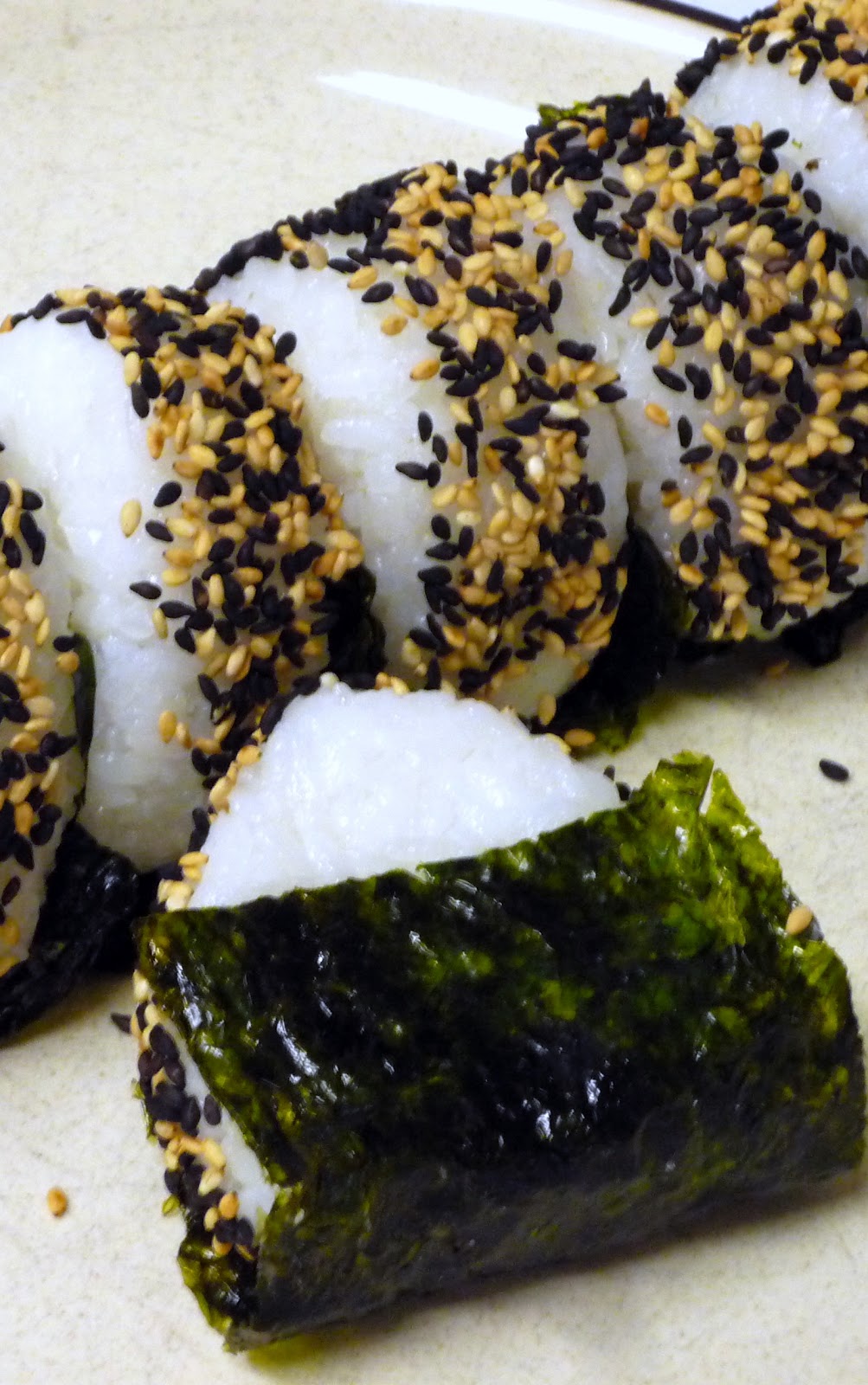
Remember the Onigiri (Rice Balls) I promised? Here they are:

There are hundreds of ways to make these, but the basic recipe is short grain rice pressed and molded by hand with a little sea salt brushed over your palms. This triangle shape is the most traditional, but people make them in all shapes and sizes. You can even stuff them with a variety of fillings from Umeboshi plums to dried, salted salmon. Just make sure that what you're filling them with isn't greasy or the oil will make the grains soggy and split up the Onigiri. I decided to munch on just a few of these with some soy beans (they were frozen, but by lunch time, they thaw and are perfect for snacking) and more strawberries and blueberries. I seldom put sweets in the boxes, but when I do, it's always fruit. Fruits can still be high in carbohydrates, so count them as part of the carb portion of your box, and you're safe. Preserving the cuts until meal time is really easy, too. Most people try a salt water dip, but I don't like adding too much sodium to something already sugary. I sprinkle my fruit with lemon juice, and it keeps its color and shape. If you're really worried about it, keep a small ice pack handy.


And the last two! (What an update, right?)

The top is Teriyaki Salmon with ginger-glazed carrots and Tamagoyaki. Bob loves teriyaki, so I confess that I make this one a lot. Up to once a week. It's a basic, easy meal that can be churned out in fifteen minutes if you have the rice already. Good teriyaki sauce can come in a variety of flavors at your local grocery store if you want to save even more time. Otherwise, I use a simple mixture of one clove minced garlic, 3 tablespoons soy sauce, 1 tablespoon brown sugar, and a sprinkle of grated ginger. When the fish is done, take it out to cool and throw in the carrots in the remaining sauce with a little honey and a sprinkle more ginger.

The bottom photo is today's concoction and catches us up from my camera. Salt Salmon, Octo/Fish Dogs, and Tamagoyaki. This is a really Japanese mix. Salt Salmon is fish (skin on) that has been cured in sea salt for the last three days. The end result can be VERY strong and fishy, but it's perfect for mashing up in the rice and is a great flavor once you get in to it. You can also try it with whole mackerel and grill it for an irresistible taste. The hot dogs are cut up like an octopus and fishes. I don't know why this is a thing in Japan, but it's so cute, I'm not objecting. It might have something to do with octopus being a popular food. In either case, these were cooked up in the pan and tossed in, too.

I'll try to be more punctual in the future, but here they are. Thanks for reading.

Wednesday, February 22, 2012

Nori!

It's the Manbearpig!

He's seriously sweet, and one of the best feelings is watching him gobble up something healthy I made for him. After dinner tonight, he wanted some Nori (dried, seasoned seaweed) for a snack. I came back, and he was trying to make the big sheet into a mustache, so I helped him out a tad.

Nori is one of those amazing foods that takes a little getting used to. Growing up with a Japanese grandmother, I've loved the green sheets forever. Usually, I'll just have a bowl of rice and a few of these and I'm good. It has a spinach-like taste with a bit of salt and soy sauce. The texture can range from the brittle dry sheets to the rubbery fresh stuff when it's moist. Mostly, it's used almost like a seasoning. Shredded over soba noodles and in Tamagoyaki, or eaten on its own as a treat. Some people don't like seaweed, but stick with it and you'll find it's the perfect complement to everyday eggs and grains. Nori is particularly amazing when you wrap it around Onigiri, rice balls. Tomorrow's bento is going to be an assortment of rice balls, so I'll post that later. Just thought the Manbearpig was worth a giggle.

Tuesday, February 21, 2012

Catching Up


Sorry about not catching up in the last couple of days. Had a test in ASL, so most of the week was spent studying. It's an interesting and fun language to learn, but if you're not practicing daily, it's easy to lose track of the signs.

That said, I'm on the net book, so I can't get my photos on here. I'll try to edit those in soon. As a peace offering, here's a lovely recipe inspired by JustBento.com The blogger on that site inspired me to get into the mini meals, and she has a phenomenal book out. If I forget to list one of her recipes, I'll shove as many customers as I can through her door to grab a copy of The Just Bento Cookbook. It's a great inspiration. On her site, she showed a few pictures of some store bought sandwiches called Katsu Sando, and the Bobbers liked the idea, so I made my own version below.

Katsu Sando
This is a crispy, breadcrumb-coated pork cutlet in sandwich form. The usual form is called Tonkatsu and is popular in a lot of Japanese restaurants. This version is convenient. :3 I also include the popular Katsu sauce if you don't have it in the grocery store.

Tonkatsu:
1 pork cutlet thinly sliced and boneless
1/2 cup flour
1/2 tsp paprika
salt and pepper to taste
1 egg
2 tbs water
1/2 cup Panko breadcrumbs or regular
Canola oil

1. Pour the canola oil in a deep pan until the oil covers 1" of the base and heat on medium high.
2. Wrap the cutlet in plastic wrap and flatten with a rolling pin, pounding until the piece is 1/4" thick.
3. Mix the flour, salt and pepper, and paprika and dredge the cutlet in the flour.
4. Whisk the egg and water and coat the cutlet in the egg mixture.
5. Press the cutlet into the Panko crumbs until it is well coated.
6. Cook in the heated oil, flipping once, for 6 minutes.
7. Remove cutlet to paper towel-lined plate and pat dry the excess oil.

Katsu Sauce: (This is amazing with chicken nuggets, too.)
2 tbs Worcestershire sauce
1 tbs ketchup
1/4 tsp soy sauce
dash of pepper to taste

1. Mix all the sauce ingredients together and taste.

When both the sauce and the Tonkatsu are ready, prepare your bread and some lettuce. (Traditionally, shredded cabbage is used instead of lettuce, but we've had too much of it lately.) Line the lettuce on one side of the sandwich and drizzle the Katsu sauce and a dab of mayonnaise. (In one of my rare cases, I prefer mayonnaise with the preservatives if I'm not going to have access to a fridge, or you could abstain altogether. If a recipe does call for mayo, though, make sure you can keep the dish cool or go with the preservatives. It's always better safe than sorry.) Top with the cutlet and bread, slice and serve.

I don't usually like pork at all. We'll maybe have it once or twice a year. Tonkatsu, though, wins me over because it's just such a quintessential Japanese treat. The pork is cheap, too, so I froze the rest of the cutlets to use in later Bentos. You can have this donburi-style, which means on rice with veggies, or even with mashed potatoes. The sandwich is a great midday pick-me-up, though, and it's convenient. Try this with chicken or fish sometime.

 Here's one of Bob's lunches: a chili cheese omelet. He said it was yummy, and all it took was a few leftovers in the fridge.

Monday, February 13, 2012

Valentine's Bento


Valentine's Day is tomorrow in case you don't own a calendar. I tend to like this holiday as an excuse to dote on Bobbers, but on the receiving end, I'm usually oblivious to it. This year, though, Bob got me my really nice Android phone, and I haven't been able to stop playing with it. Good score.

Last year, I made him a steamed lobster tail bento. It's not something I would recommend unless you have access to a refrigerator and a microwave to keep it safe. Seafood is usually a big no-no when it comes to bentos, but there are a few safe recipes. Tomorrow's is a great example.

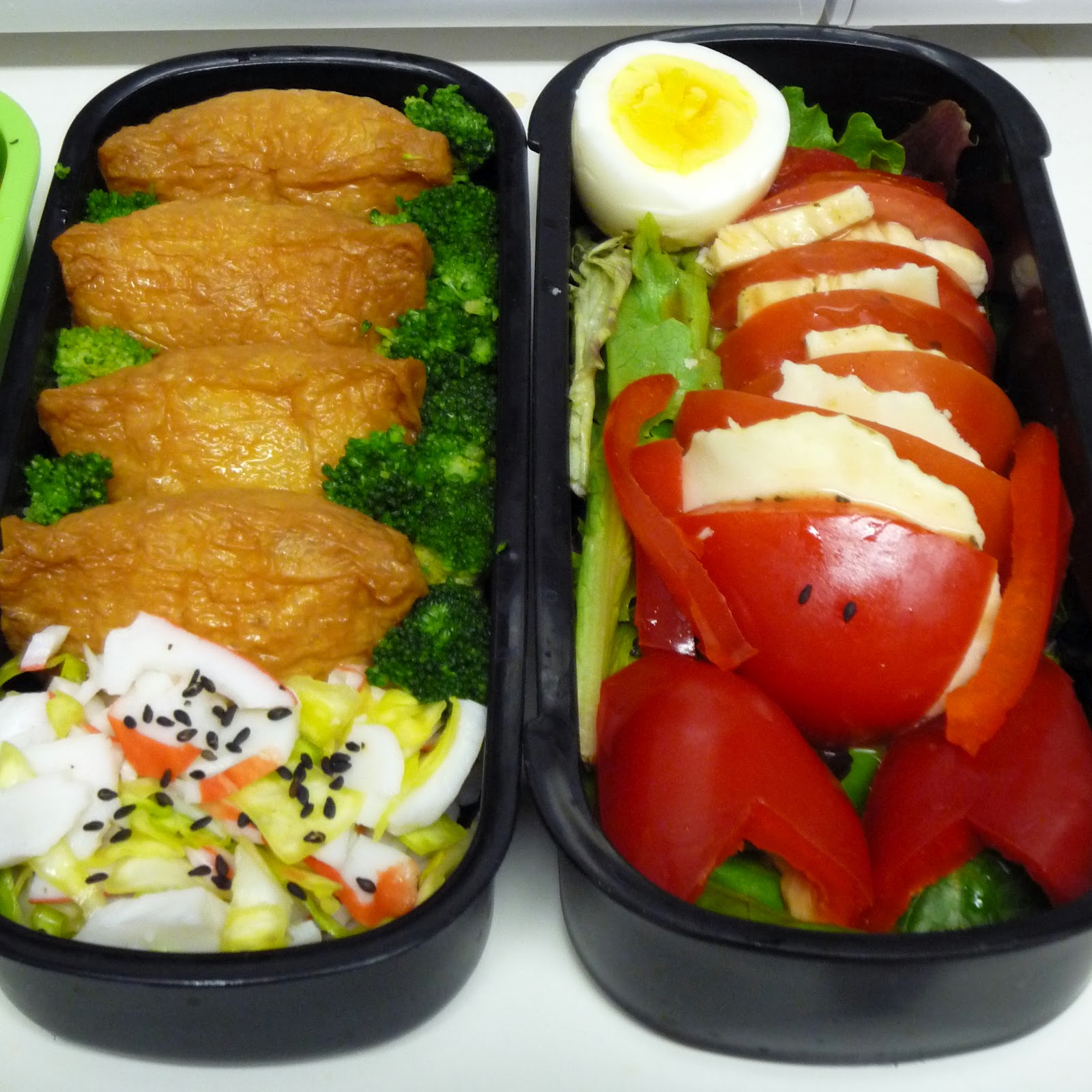
This year, I made a crab meat and cabbage slaw, inari zushi pockets, and a hard-boiled egg. Bob got another lobster this year...kind of. This little guy is made of roma tomatoes, red bell peppers, and mozzarella cheese. I sat him on a bed of salad and splashed some balsamic vinegar dressing over him. I recommend packaging dressings for salad separately because it can really make your lettuce soggy and unappetizing, but the lobster is the feature here, and soaking in a little dressing will make him tasty tomorrow.

The crab salad is one of those safe recipes for bentos. I used imitation crab, but you can also use canned crab. Both of these won't spoil as quickly as fresh crab meat. Just keep in mind that you might want to half the sugar if you use imitation as the meat is really sweet.

Crab and Cabbage Slaw: (makes 4 servings)

2 cups shredded cabbage
1 cup shredded canned or imitation crab
2 tsp salt
2 tbs rice vinegar
1-2 tsp sugar
ground pepper and black sesame seeds to taste

1. Massage the salt into the cabbage until it wilts and pat dry with a paper towel.
2. Add the vinegar and sugar, mixing vigorously.
3. Mix in the crab meat and sprinkle with pepper.
4. Serve with sesame seeds sprinkled on top.

The inari pockets you can get canned at a grocery store or Asian market. If you can't find them there, try online. They're one of the few items that you can order fairly cheap, and they last a little while. Just drain the can and blot out the pockets. I stuffed these with sushi rice (rice with a little vinegar, sugar, and salt), but you can fill them with rice and other treats like tuna, salmon, furikake, egg soboro, veggies, etc.

Happy V-Day!

Friday, February 10, 2012

Tapping the Pantry

Thursday's meal was a tuna, egg, and spinach soboro. Soboro is kind of like a casserole. You take some basic flavors, mince them, and serve on top of rice. It's very yummy, satisfying, and you can make it quickly with pretty much anything you have on hand.

I think I'll update every other day instead of each day. School really took its toll this week, and I'm not even into midterms and finals. The classes are fun, I just get busy quickly.

Today's topic is the pantry. We keep a lot of potential meals in there but forget about them. How often do you dread taking something new home because you're out of space? Well, something's taking up the space in there, right? Soboro is a perfect way to thin out the extra tuna, chicken or corn cans in there, and you'll end up with a tasty mix.

I had some tuna in there this week, so I pulled out the can, popped it open and threw it in the skillet. All it took was a tablespoon of soy sauce, some green onions that I keep chopped in the freezer, and a little ground ginger. The middle flavor is a single egg soboro. The recipe is almost identical to the Tamagoyaki feature but minus the vinegar and reduced to a third of the portions. Scramble the egg mixture and mince with a fork while it cooks to get the little granules you see above. The sweet egg and slightly salty fish mix wonderfully in the rice. Finally, the spinach was a bit of the frozen kind that I keep as a side. I cooked it in the microwave with two tablespoons of water and added a little dash of soy sauce and a half clove of minced garlic, spooning the rest of the soy water over the rice bed to keep it moist.

It really is that easy, and clean up was a breeze. You can exchange the tuna for canned chicken, chicken breast (as long as you mince it finely), ground beef, ground turkey, or anything really. I've seen recipes that used canned or fresh green beans, corn, and julienne carrots. Just make sure that the pieces are minced fine so you can work them through the rice and mix the flavors. Soboro can also use noodles instead of rice, if you want a change of pace and to get rid of the extra noodles.

Wednesday, February 8, 2012

Bento Shuffle


Sorry about missing an update the other day. I tried with my Android, but because I didn't have good reception on campus, I couldn't get the photos in. Oh well.

Yesterday's was a black bean burger, mozarella cheese, onigiri, and new potato fries box. It's really simple food, but what I wanted to show was how one of these boxes fair after a day of running around before you tuck in at noon. I've been taking the bus to the campus on Tuesdays to save a little driving for the hubby, so I'll admit that I kind of slide around and abuse the boxes a little more than someone gingerly carting theirs to and fro. That's alright, though. A well-packed box will have minimal damage. I used the extra spaces in the box to fill it out with broccoli. I can't tell you how I've converted to the little trees through Bentos; they are amazingly versatile and healthy. By lunch, mine went from the above to this:


Not horrible, but it's not perfect like the first, and you can tell the potatoes went soggy. Admittedly, I made this the night before, so the fridge can take a toll on the food. You can see why picking like flavors is a must, too. Even tightly packed, you're going to have them sliding into each other, so they better taste good together. The biggest thing I should have paid attention to was this:


That's condensation on the lid. I didn't pay it much mind the night before because this was going into the fridge for the night, but if you're making your box fresh, the moisture will really sabotage your food. As an added caution, moisture allows bacteria to grow at the warm temperature of the box, so by noon, you could have something awful-looking and dangerous on your hands. Make sure to give yourself time to cool the box before you close it, and you'll get something more like the first photo. Popping the box in the freezer for a few minutes will help draw out the moisture, but don't leave it too long in there. Rice gets dry really quickly. For best results, let your box sit out on the counter for about twenty minutes while you finish your morning ritual.